A hydrostatic transmission converts engine or motor power into variable hydraulic flow and then back into rotary output. The pump cannot be selected independently from the loop, motor, charge system, controls and machine duty.
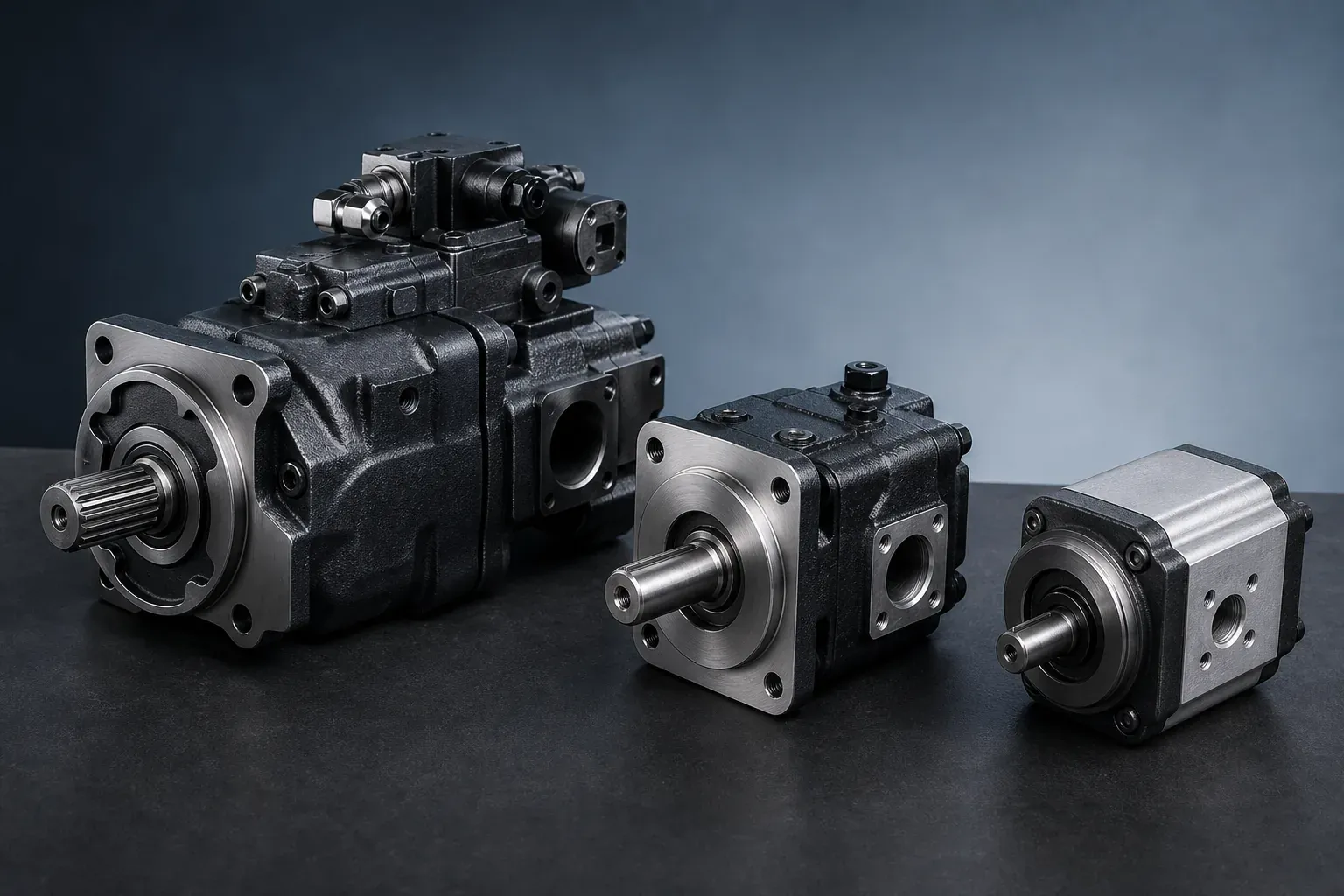
Request a hydrostatic pump replacement review.: Send the complete pump and motor codes, machine model, photos, control details, pressure, speed, quantity and destination.
Main components in a hydrostatic drive
- Variable-displacement hydrostatic pump controlling flow direction and magnitude
- Fixed or variable hydraulic motor producing output torque and speed
- Charge pump maintaining loop fill, cooling flow and control pressure
- High-pressure relief, charge relief, flushing and make-up valves
- Mechanical, hydraulic or electronic displacement controls
Operating relationships
- Pump displacement and speed determine theoretical loop flow
- Motor displacement and pressure differential determine output torque
- Charge pressure must remain within the component and machine limits
- Case-drain flow and temperature help identify wear or internal leakage
- Control response must suit the machine, prime mover and safety system
Hydrostatic pump replacement checklist
- Complete pump code, material number and machine serial information
- Displacement, rotation, control type and control-pressure requirements
- Shaft, flange, ports, through-drive and installed orientation
- Charge-pump size, relief settings, flushing circuit and fluid
- Motor code, machine duty, symptoms and contamination history